Typical duties
- Prepare or support safe food service
- Maintain accommodation hygiene standards
- Manage stores, laundry or stewarding tasks
- Follow offshore safety and infection controls

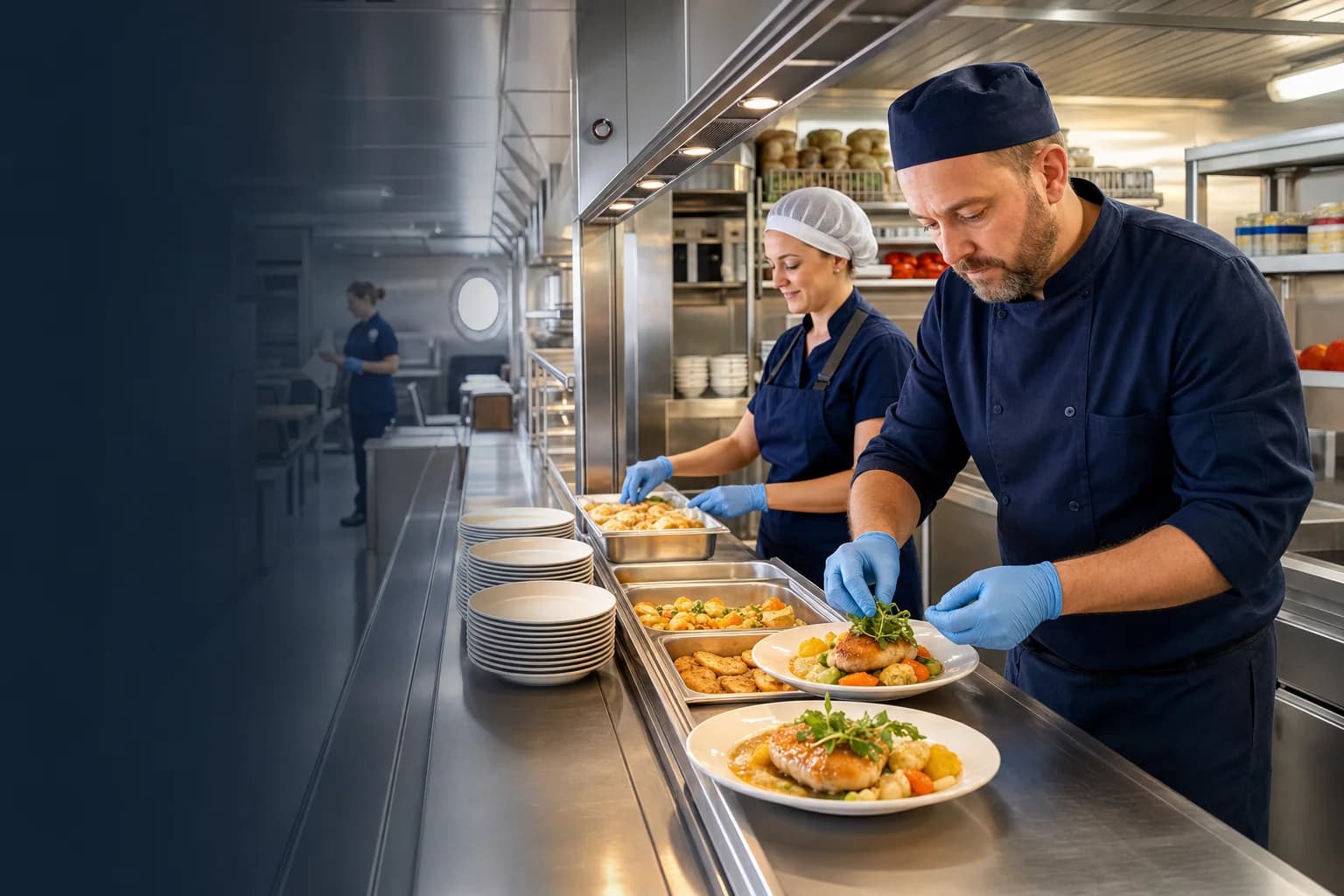
Essential offshore services
These roles keep offshore installations safe, hygienic and functional. Profiles emphasise food safety, high-volume service and rotation readiness.
Steward/galley hand → chef/supervisor → camp boss.
Training for this role
Catering and accommodation training should match food safety, allergens, hygiene and the precise offshore survival route required by the asset.
Review the asset-specific offshore survival route; use a suitable food-safety provider for the productive catering qualification.
View provider guideReview OPITO or STCW safety prerequisites separately from the productive food-safety qualification.
View provider guideRole pathway guide
Catering and accommodation teams maintain food service, hygiene and living standards for people working offshore. Roles include chefs, bakers, galley hands, stewards, housekeepers, laundry staff and camp bosses.
Employers value high-volume service experience, reliable hygiene controls and the ability to work a rotation within a close-knit installation community. Food safety is assessed alongside offshore readiness.
Teams work early, late and split shifts to support round-the-clock operations. Storage limits, resupply schedules, allergens, COSHH controls and infection prevention all require consistent records and routines.
Certificate names, numbers, issuing bodies, dates and files must agree. Offshore Personnel records expiry and review status, but the employer and certificate issuer decide whether evidence is accepted for a particular assignment.
Never alter documents or describe supervised exposure as independent competence. Accurate profiles are easier to assess and safer to mobilise.
Common questions
Requirements vary by employer, asset and jurisdiction. These answers explain the recruitment approach and the evidence employers commonly assess.
Some support roles may accept transferable experience, but employers still require proven hygiene, service reliability and the offshore evidence specified for the installation.
Allergen awareness is commonly relevant to food-service duties. The employer determines the accepted qualification and any additional site procedures.
A camp boss may coordinate catering, accommodation, stores, hygiene and service teams. Employers normally expect substantial operational and supervisory experience.