Typical duties
- Operate or maintain ROV systems
- Support launch and recovery
- Monitor subsea inspection and intervention
- Maintain technical and shift records
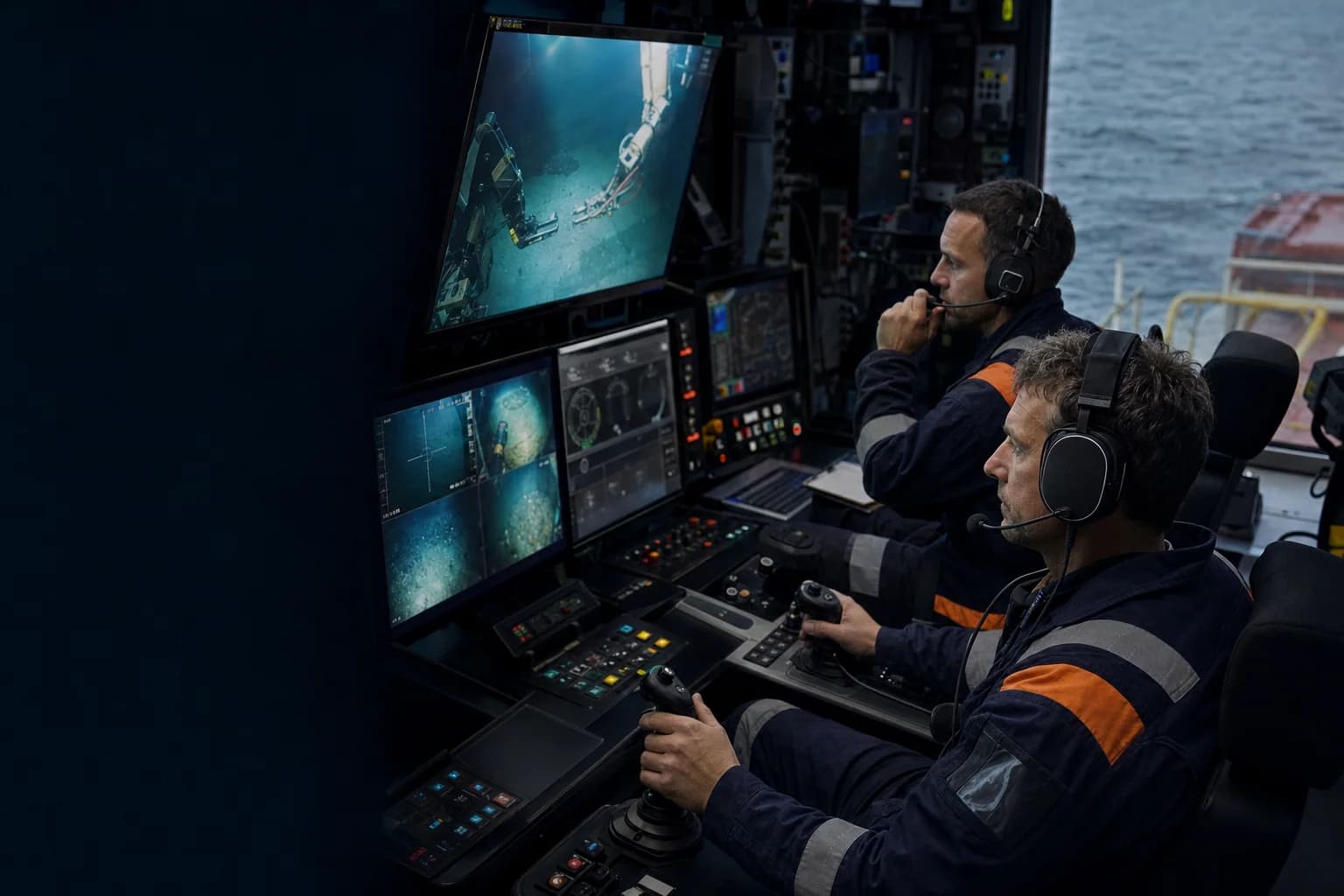
Below the waterline
Technical profiles capture vehicle systems, tooling, hours, project environments and marine safety evidence for subsea operations.
Trainee pilot/tech → pilot technician → supervisor or superintendent.
Training for this role
ROV and subsea routes require specialist technical and logged operational competence. General wind training is not a substitute.
Review marine, STCW, electrical, hydraulic and offshore-safety categories while retaining a specialist ROV competence route.
View provider guideReview STCW maritime and OPITO offshore-survival training against the vessel and mobilisation route.
View provider guideRole pathway guide
Subsea and ROV teams support inspection, survey, intervention, construction and maintenance below the waterline. Roles combine vehicle operation with electrical, hydraulic, electronic and mechanical fault finding.
A useful profile records vehicle classes, control systems, tooling, launch-and-recovery experience, logged pilot or technical hours and the types of projects completed.
ROV personnel commonly work from offshore vessels in shift patterns aligned to continuous operations. Sea state, deck operations, equipment reliability and client reporting influence the daily programme.
Certificate names, numbers, issuing bodies, dates and files must agree. Offshore Personnel records expiry and review status, but the employer and certificate issuer decide whether evidence is accepted for a particular assignment.
Never alter documents or describe supervised exposure as independent competence. Accurate profiles are easier to assess and safer to mobilise.
Common questions
Requirements vary by employer, asset and jurisdiction. These answers explain the recruitment approach and the evidence employers commonly assess.
Many employers prefer electrical, electronic, hydraulic or mechanical competence because pilot technicians also maintain and troubleshoot the system.
Not always. Requirements depend on employment status, vessel arrangements, client rules and jurisdiction. The vacancy specification must be checked.
Record vehicle class, role, project type, hours, tooling, launch-and-recovery activity and technical responsibilities without overstating supervisory authority.