Typical duties
- Operate cranes within approved limits
- Complete pre-use and shift checks
- Coordinate with deck teams and banksmen
- Respond to weather and operational limits

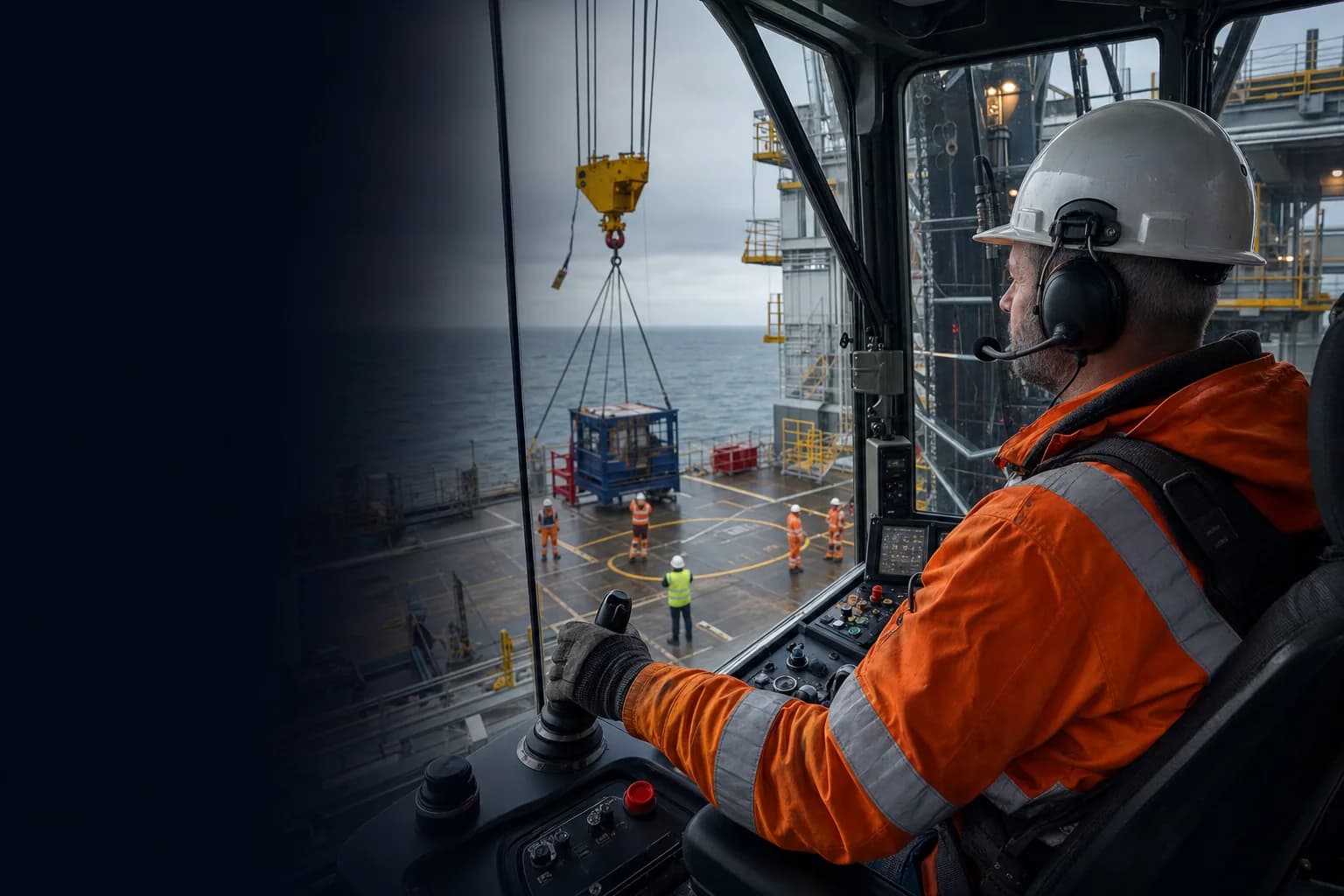
Precision at height
A crane profile records equipment types, capacity bands, logbook history and verified competence alongside offshore prerequisites.
Crane operator → senior operator → lifting authority/supervisor.
Training for this role
Crane and lifting training must match equipment, capacity, operating environment and the authority required by the client.
Review offshore lifting, competence and simulator-supported categories against the crane and asset.
View provider guideReview the published user, inspection and maintenance categories where they match wind-project duties.
View provider guideRole pathway guide
Offshore crane operators handle personnel-supporting logistics, vessel lifts and deck operations under strict operating limits. Experience is specific to crane type, capacity, control system, asset and the categories of lift undertaken.
Profiles should show operating history, competence assessment, logged hours and any client or installation authorisations. A general crane ticket is not evidence of authority to operate every offshore crane.
Operators coordinate closely with banksmen, deck crews and vessel masters. Visibility, wind, sea state, dynamic loads and nearby operations affect whether work can proceed.
Certificate names, numbers, issuing bodies, dates and files must agree. Offshore Personnel records expiry and review status, but the employer and certificate issuer decide whether evidence is accepted for a particular assignment.
Never alter documents or describe supervised exposure as independent competence. Accurate profiles are easier to assess and safer to mobilise.
Common questions
Requirements vary by employer, asset and jurisdiction. These answers explain the recruitment approach and the evidence employers commonly assess.
No. Employers consider the competence standard, crane type, operating history and any asset-specific authorisation required for the installation.
Many employers use logbook evidence to assess currency and relevant experience. The exact requirement is set by the client and competence scheme.
Onshore experience may provide a foundation, but an offshore competence route, safety prerequisites and supervised familiarisation may still be required.