Typical duties
- Handle cargo and deck operations
- Support vessel/platform interfaces
- Maintain deck equipment and work areas
- Assist lifting and marine operations

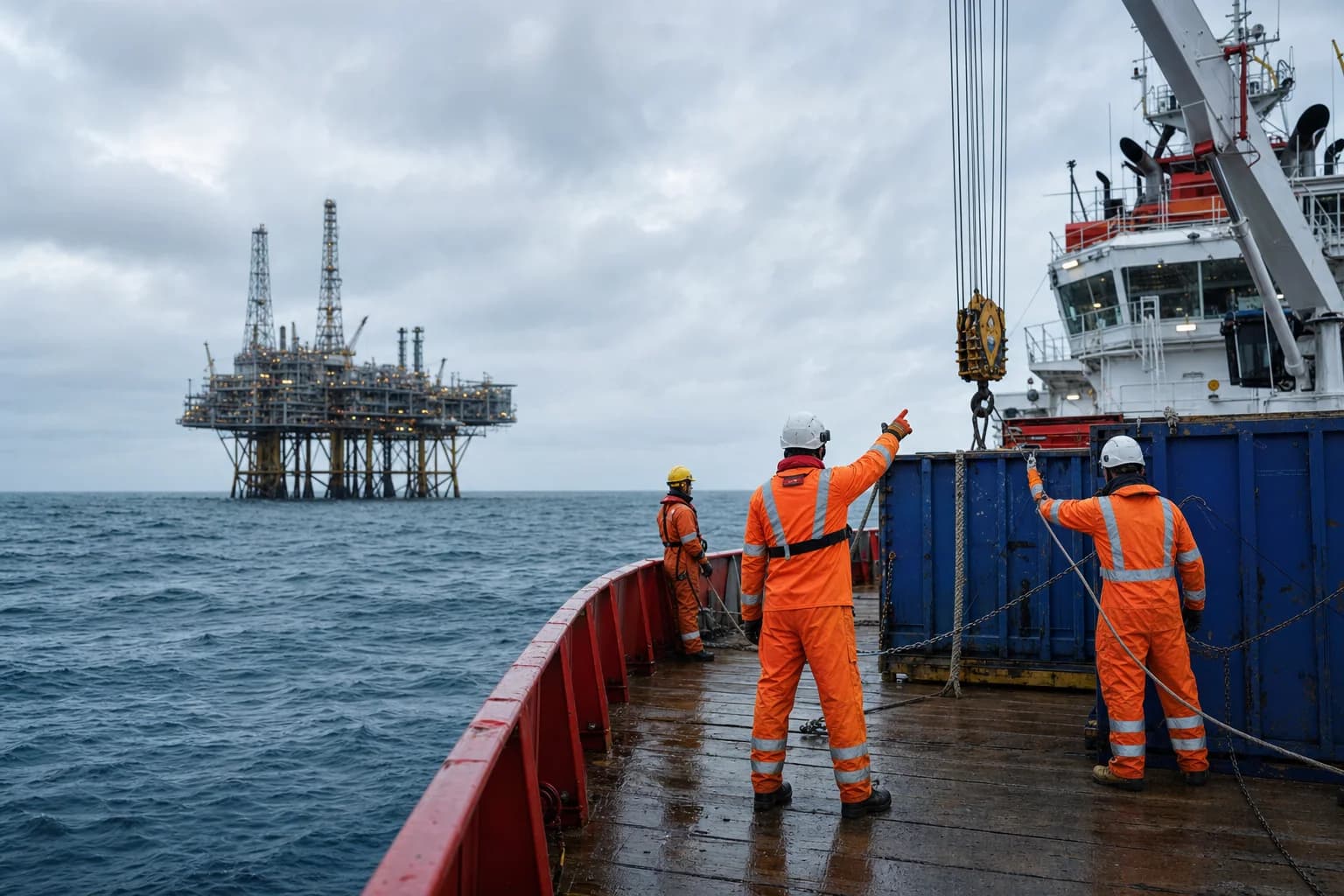
Work at the interface
Profiles make marine experience, lifting support, cargo handling and specialist maintenance skills visible and verifiable.
Deckhand → able seafarer/lead deck crew → bosun or specialist.
Training for this role
Deck and marine training depends on whether the productive duty is lifting, coatings, cargo handling, vessel work or another specialist trade.
Review STCW, marine, OPITO survival and lifting categories against the vessel and assignment.
View provider guideReview published slinger-signaller, crane-and-hoist, ICATS coating, blasting and spraying categories where relevant.
View provider guideReview MCA-accredited STCW, rescue-boat and offshore-survival routes against the vessel and assigned deck duty.
View provider guideRole pathway guide
Deck and marine-support personnel handle cargo, maintain work areas and support the interface between vessels and offshore installations. Roles can include deckhands, able seafarers, bosuns, painters, blasters, scaffolders and general support trades.
Because the category is broad, profiles must identify the productive role, vessel or platform history and the marine, lifting or trade evidence that supports it.
Deck work is exposed to weather, vessel movement, suspended loads, lines under tension and changing cargo plans. Clear communications, housekeeping and respect for exclusion zones are essential.
Certificate names, numbers, issuing bodies, dates and files must agree. Offshore Personnel records expiry and review status, but the employer and certificate issuer decide whether evidence is accepted for a particular assignment.
Never alter documents or describe supervised exposure as independent competence. Accurate profiles are easier to assess and safer to mobilise.
Common questions
Requirements vary by employer, asset and jurisdiction. These answers explain the recruitment approach and the evidence employers commonly assess.
They belong to different maritime and offshore competence frameworks. Which route applies depends on the vessel, installation, employment arrangement and client.
Scaffolding, coating, rigging and maintenance experience may transfer when supported by the required marine or offshore safety evidence.
Record vessel and asset types, cargo operations, lifting duties, mooring or transfer experience, certificates and any specialist maintenance trade.