Typical duties
- Prepare slings, shackles and lifting accessories
- Banksman and signalling duties
- Inspect equipment before use
- Maintain exclusion zones and lift communications

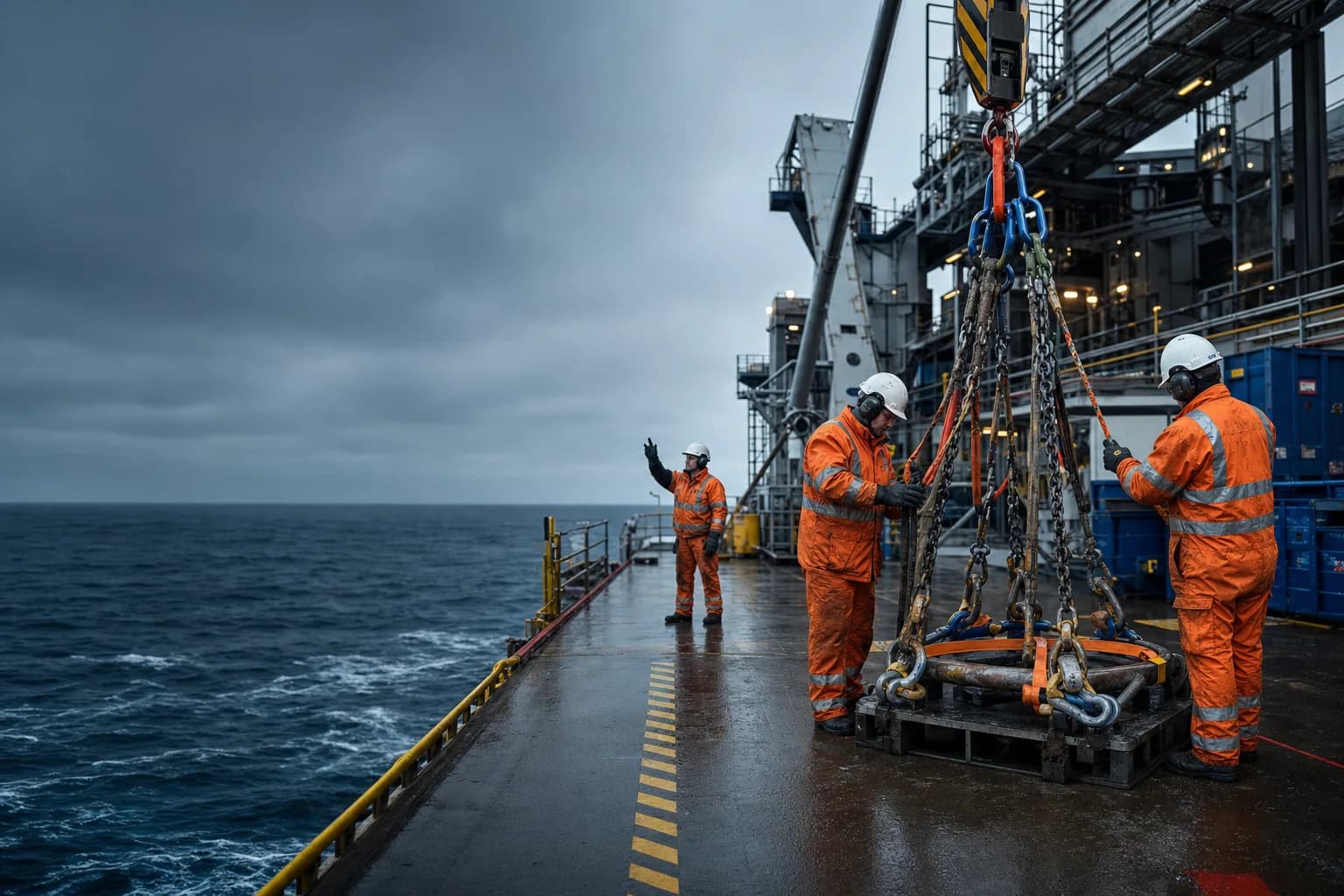
Controlled lifts
Evidence-led profiles for workers who understand lift plans, exclusion zones, communications and the discipline required around suspended loads.
Lifting operative → competent rigger → lifting supervisor.
Training for this role
Training must reflect whether the target role is rigger, banksman-slinger, crane-and-hoist user or lifting supervisor and whether the asset uses OPITO or GWO standards.
Review OPITO rigger and banksman-slinger training, competence assessment and broader lifting categories.
View provider guideReview published GWO slinger-signaller and crane-and-hoist categories for relevant wind duties.
View provider guideRole pathway guide
Offshore lifting depends on disciplined teamwork between riggers, banksmen, slingers, crane operators and lifting supervisors. The work involves selecting and inspecting lifting accessories, controlling loads and maintaining clear communication throughout the task.
Employers assess the categories of lifting work a person has performed, their competence route and the quality of logbook or project evidence. A generic training certificate cannot demonstrate experience with every lift type.
Lifting takes place on exposed decks, inside modules and during shutdowns where several trades may share a constrained area. Weather, vessel movement, overhead hazards and simultaneous operations can change or stop a lift.
Certificate names, numbers, issuing bodies, dates and files must agree. Offshore Personnel records expiry and review status, but the employer and certificate issuer decide whether evidence is accepted for a particular assignment.
Never alter documents or describe supervised exposure as independent competence. Accurate profiles are easier to assess and safer to mobilise.
Common questions
Requirements vary by employer, asset and jurisdiction. These answers explain the recruitment approach and the evidence employers commonly assess.
Training introduces knowledge and practical skills. Competence normally requires assessment and evidence that the person can perform the defined role safely in relevant conditions.
Offshore assignments commonly require current survival and medical-fitness evidence, but the exact standard depends on the client, asset and location.
Logged experience helps recruiters compare previous lifting work with the actual scope instead of relying on a certificate title alone.