Typical duties
- Plan and perform controlled rope access tasks
- Inspect equipment and maintain exclusion zones
- Complete trade tasks while on ropes
- Record hours and maintain logbook evidence

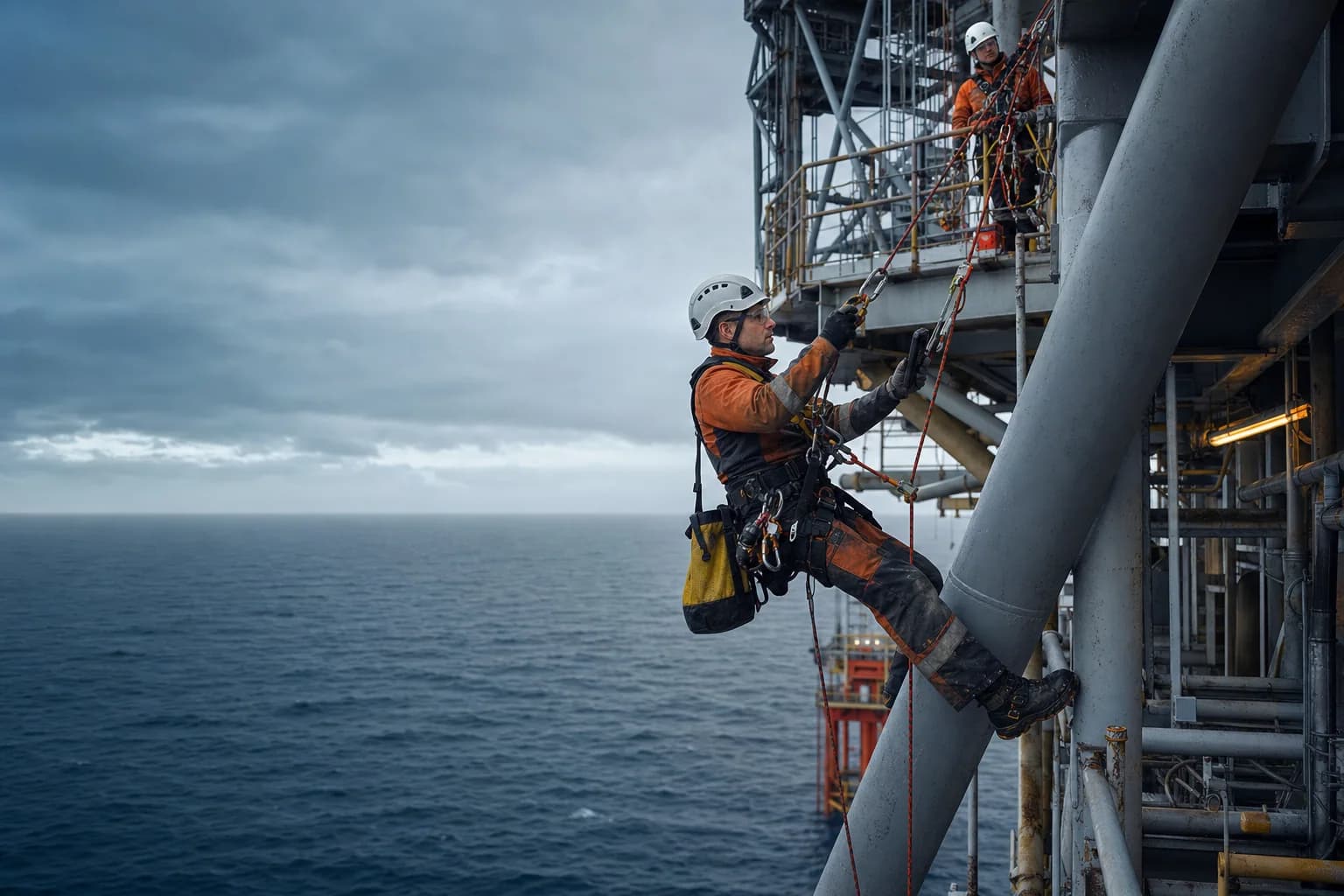
Access difficult places
The strongest rope access profiles pair a current level and logbook with a productive secondary trade such as NDT, mechanical, electrical or fabric maintenance.
IRATA L1 → L2 → L3 supervisor/specialist lead.
Training for this role
Rope-access training should be paired with the productive trade required by the project, such as inspection, mechanical work or coatings.
Review IRATA alongside NDT, mechanical, electrical or coatings training for the productive task.
View provider guideReview published IRATA initial, revalidation and refresher options alongside relevant trade training.
View provider guideRole pathway guide
Rope access is a method of reaching work, not the productive task itself. Employers usually recruit technicians who combine an IRATA level and current logbook with inspection, mechanical, electrical, welding, painting or another trade.
Profiles must show the technician’s level, assessment expiry, logged hours, rescue experience and secondary competence. This helps distinguish access capability from the work performed while on ropes.
Tasks take place on exposed structures with controlled anchor systems, exclusion zones and rescue plans. Weather, dropped-object controls and coordination with other workgroups affect daily operations.
Certificate names, numbers, issuing bodies, dates and files must agree. Offshore Personnel records expiry and review status, but the employer and certificate issuer decide whether evidence is accepted for a particular assignment.
Never alter documents or describe supervised exposure as independent competence. Accurate profiles are easier to assess and safer to mobilise.
Common questions
Requirements vary by employer, asset and jurisdiction. These answers explain the recruitment approach and the evidence employers commonly assess.
Some opportunities exist, but employers commonly prefer a useful secondary trade and relevant work experience. IRATA provides access competence rather than a complete occupation.
The logbook supports level progression and provides evidence of currency, supervision and the environments in which hours were gained.
No. Training and assessment are delivered by approved providers. Offshore Personnel records evidence supplied for recruitment and verification.