Enhanced Learning Credits
ELC support is subject to service history, an eligible qualification and an approved learning provider. A personal contribution and a valid Claim Authorisation Note may be required.

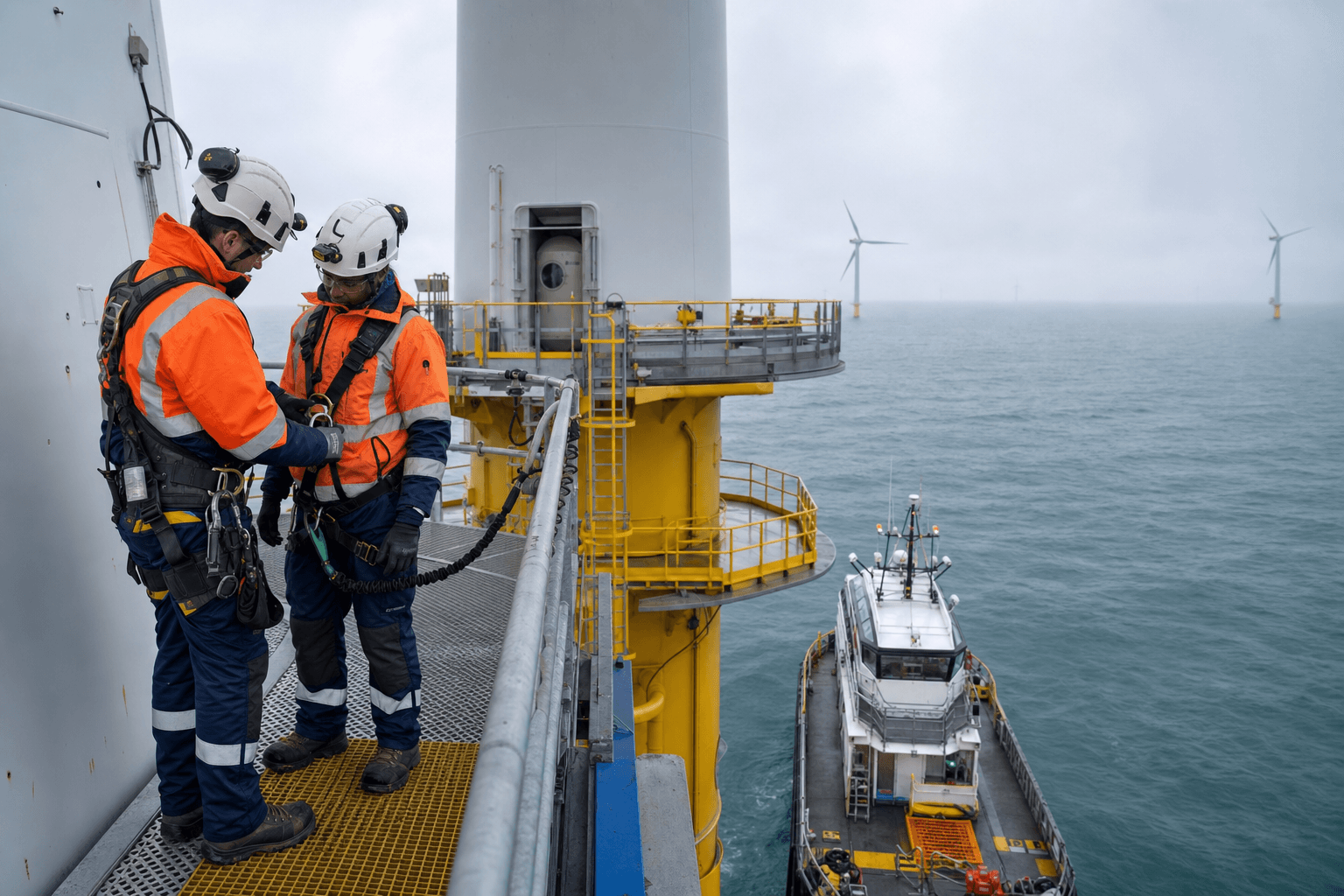
Armed Forces transition
A focused guide for serving personnel and eligible service leavers considering ELCAS-supported wind training through published training-centre routes.
Military experience can transfer well into wind operations, particularly where it demonstrates electrical or mechanical ability, leadership, lifting, logistics, marine awareness, emergency response or disciplined work in controlled environments. Training should build on that productive skill rather than replace it.
Published routes from 3t Training Services and OEG Training combine a level 3 wind-safety qualification with relevant Global Wind Organisation learning outcomes. The exact award, modules, dates, location, cost and funding contribution must be confirmed before a claim is submitted.
ELC support is subject to service history, an eligible qualification and an approved learning provider. A personal contribution and a valid Claim Authorisation Note may be required.
The Individual Resettlement Training Cost grant and Career Transition Partnership support may also be relevant. Your Single Service education or resettlement adviser confirms the correct route.
OEG publishes an ELCAS-funded ITC Level 3 Certificate in Safe Working Practice in the Wind Turbine Industry from its Liverpool training centre. Provider ID and current package details must be checked directly.
3t publishes a four-week Military to Wind programme leading to an ITC Level 3 Diploma with GWO learning outcomes at its Newcastle centre. Confirm the current delivery location before booking.
Decision sequence
Use a controlled sequence so the course supports a real role and the resulting evidence can be assessed accurately.
Confirm your service eligibility, remaining credits, resettlement window and whether ELC, IRTC or another support route applies.
Decide whether you are targeting electrical, mechanical, lifting, rope-access, marine or another productive wind role before comparing packages.
Check provider approval, qualification level, modules, prerequisites, medical requirements, dates, location, total fees and personal contribution.
Follow the official claim timetable and give the provider the required authorisation before the course starts. Do not assume retrospective funding will be accepted.
Verified next steps
Provider information, funding rules and course availability can change. Use these links to check the current position.
Common questions
These answers explain the route and identify where the official scheme, provider or employer makes the final decision.
Not automatically. Support depends on your entitlement, the approved qualification and provider, the claim rules and any personal contribution. Obtain formal authority before training begins.
This Offshore Personnel pathway is specifically limited to published wind-sector transition programmes. It should not be read as general funding guidance for oil and gas or every offshore occupation.
No. Employers still assess productive trade competence, experience, medical fitness, right to work, availability and the requirements of the particular project.
Current official service-leaver guidance says claims should be submitted to the appropriate Single Service representative at least 25 working days before the course start date. Check the current rule with your adviser.