Typical duties
- Provide offshore clinical support within competence
- Maintain emergency readiness and medical inventory
- Participate in drills and response planning
- Keep confidential, accurate records

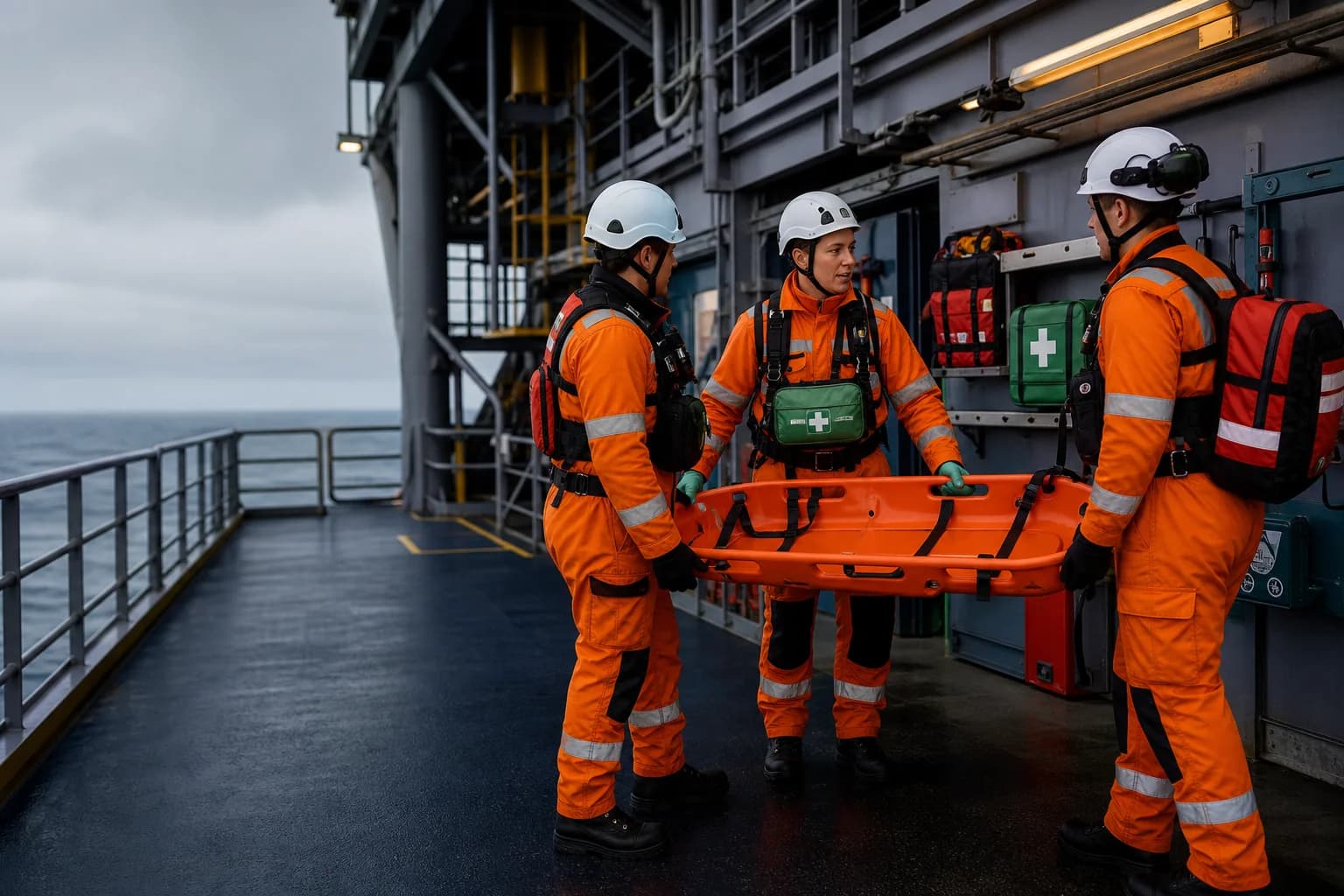
Readiness offshore
Highly restricted profiles separate professional fitness evidence from unnecessary clinical details and focus on current registration, emergency competence and deployment readiness.
Offshore medic → senior medic → medical/emergency coordinator.
Training for this role
GWO first-aid and rescue courses may support a wind assignment, but they do not replace professional registration or an approved offshore-medic qualification.
Review medical, first-aid, firefighting and response categories without replacing professional clinical qualifications.
View provider guideExplore published enhanced first-aid and advanced-rescue categories for appropriate wind duties.
View provider guideReview GWO Enhanced First Aid, Advanced Rescue, STCW medical and industrial-fire categories for the defined response duty.
View provider guideRole pathway guide
Offshore medics provide clinical care in remote settings and contribute to emergency preparedness, occupational-health processes and medical inventory control. Scope depends on professional registration, approved training and the asset’s arrangements.
Recruitment records focus on professional status, competence and fitness to deploy. Full medical histories are neither necessary nor appropriate for general recruitment screening.
A medic may work independently for long periods before coordinating with onshore clinical support or emergency evacuation services. Drills, confidential record keeping and readiness for low-frequency high-consequence events are central.
Certificate names, numbers, issuing bodies, dates and files must agree. Offshore Personnel records expiry and review status, but the employer and certificate issuer decide whether evidence is accepted for a particular assignment.
Never alter documents or describe supervised exposure as independent competence. Accurate profiles are easier to assess and safer to mobilise.
Common questions
Requirements vary by employer, asset and jurisdiction. These answers explain the recruitment approach and the evidence employers commonly assess.
No. Recruitment records should hold only proportionate medical-fitness evidence or status. Unnecessary clinical histories are not required.
The required profession and registration depend on the employer, jurisdiction and offshore-medic specification. Each vacancy must state the accepted route.
They commonly are, but the exact responsibilities, team structure and additional qualifications depend on the installation.